BY WORKU BELACAHEW
BY
WORKU BELACAHEW
Tadele
Hordoffa,75, is a resident in Addis. He used to engage in his own
private business before retiring some seven years from now due to
health reasons. To him it is too difficult to stay the whole day at
home. His daily routine begins in visiting the nearby chapel for a
morning prayer. Then the prolonged traditional coffee ceremony at his
home together with other minor activities he absorbs himself in help
him spend most of his time. But, he could not endure staying at home
between the time 4 and 7, in the afternoon. This is also a
tantalizing time to be outside of home.
“For
a person of my own age walking or sitting by the road sides have
both recreational and health values,” he says. “However, starting
from my residence around Saris till Meskel square you could not get
any rest-stop by the road sides, I expected that the construction of
the exchange road around Gottera might bring comfortable green space
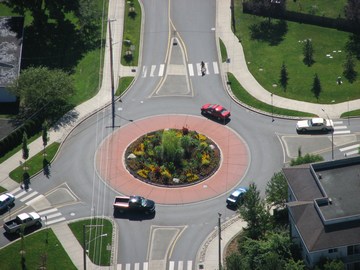
with certain recreational facilities. In deed, it has open space in
the middle, but, still goes without any infrastructures, I dare say
the capital is not suitable for persons like me, ” he adds.
Bezawit
Alemu, 7, lives with her parents around Megenagna. She long awaited
the conclusion of this school year. It is not because she hate going
to school, but her parents promised to buy a bicycle to her only if
she scores good marks and promoted from Upper kindergarten to grade
one. The tot has luckily performed best from her class and got the
promised award from her parents. No one, however, predicted that they
have no safe place in their compound to ride the bicycle, sadly nor
it is available in their neighborhoods as all the previous open
spaces which served as a play field have been occupied.
The
125 years diplomatic hub of Africa and capital of Ethiopia, Addis
Ababa, is witnessing construction boom. The capital's previous
defining characters like shanty and slum neighborhoods now see a
light of redevelopment. To day lots of these places turn to high rise
condominium houses. Roads of various kinds are constructed or are
under construction. Yet, the city's development is not a full-fledged
one-as many agree. It is not hyperbolic saying Addis is experiencing
a symptom of increasing concrete jungle. Most places which were
reserved for public space are engulfed by illegal constructions.
Similarly, many of the spaces which are delineated for green areas
are not developed while some of the parks with good facilities are
unable to give services. The trend is completely, in at most, against
the capital's master plan that envisaged to creationg safe and
livable city.
Abebaw
Sentie is director of Urban Planing and Information Institute at the
Addis Ababa City Administration explains; Environmental Protection is
among the grand components of the city's already concluded ten years
master plan. This is a generic term which include main social and
municipal services include festival, trade fair, sport and
recreation, green areas near rivers, parks, cemetery, fire brigade
and so on. Such places are located on the master plan. To mention,
but few of them, festival sites like Jan meda, the largest available
open space in the north-east; a place around Hana Mariam (West of
Addis) and there is also a place reserved for same purpose around CMC
(east of Addis) To put it in figures 40% (around 22000 hectares) of
the total landmass was reserved to serve these purposes, Abebaw
added. This time the revision of the capital's master plan is on its
way. Surely, it helps us get the prevailing conditions of these
places as we will collect data pertinent to that. But, our general
evaluation have it that most of the open spaces are either grabbed
for illegal constructions or do not get the appropriate attention by
the concerned authorities.
Abebaw
also unveils that due to the traditional settlement in Addis some of
the places near the river sides are already populated. According to
him, it needs a huge budget to relocate the settlers. Being this the
fact, not a few of the river sides are consumed by illegal housing
constructions.
In
his Master's thesis titled Open space provision in residential areas:
critical evaluation of selected cases in Addis Ababa (July 2005)
Architect Yeneneh Chanyalew identified certain issues which had to
be addressed regarding residential open spaces in the capital. To
mention, but few; the various city plans of the capital overlooked
the importance of open space particularly in residential areas which
could have been considered as an integral part of the open space
system of the city. As a result, the spaces were disconnected or
given loose function. Thus, he suggested the consideration of
comprehensive city plan that reinstate the already available open
spaces. According to him the provision of open space would be best
when it is matched with the spacial need of inhabitants and the role
of the open space. More importantly, he argued that a detailed urban
and landscape design guideline has an escalated importance in
determining the location of open spaces,the management of facilities
in it like; seats,street lights, telephone booths,fountains and so
on. The availability and proper management of these facilities would
increase the number of people enjoy and stay in these places,he
wrote.
Yeneneh
said the capital has proved development than it was seven years from
now when he conducted his master's thesis. Yet, the absence of the
aforesaid guideline is felt as there is hardly successful open space
in the city. Still, there are opportunities to provide Addis with
successful open spaces, according to him. For one thing, we can model
best practices from other successful cities. Not only that, there are
also many bad experiences of other cities. Thus, it is possible to
draw the best out of these. He also perceives the ongoing rapid urban
redevelopment works in Addis Ababa as good opportunities to allocate
new open spaces.
As
the writer of this piece has observed the roadside parks in various
places across the city there are irregularities in ownership and
handling of the parks, in most cases. The relatively green belt
(parks) which are enriched by the famous business tycoon Sheikh
Al-Amoudi Africa Park and Millennium Park, for instance are
still closed for public use, only one of them Addis Ababa park is
made open for public. Due to that the facilities in the other two
parks are damaging. Anonymous body posted 'no entrance' on the street
park around Sidest Kilo, near ministry of Finance and Economic
Development. Many play grounds in most neighborhoods are engulfed by
constructions. Leave aside that pedestrians are getting hard time
hustling with vehicles as high rise buildings compete the side walks
for parking lot.
Various
researches supports the notion that urban open spaces offer health
benefits through giving residents mental relief from the stress of
concrete jungle life. People can be a passive participants of green
space through watching birds and listening to their songs, getting
fresh breeze, time spent sitting or reading. Besides, when open
spaces are attractive and accessible, people are more likely to be
active participants on the places like engaging in physical
activities which directly improve their health.
Yeneneh on his part has indicated
that, there are general indicators as small kids and youngsters are
full of energy. Thus, the availability of well managed play fields
are means to release this energy. Besides, it is children's behavior
to play. Open spaces also comforts senior citizens, pensioners,
people with disabilities and so on. City is not only a mere
combination of the roads and buildings green value is also part and
parcel of a standard city, he concludes.

